
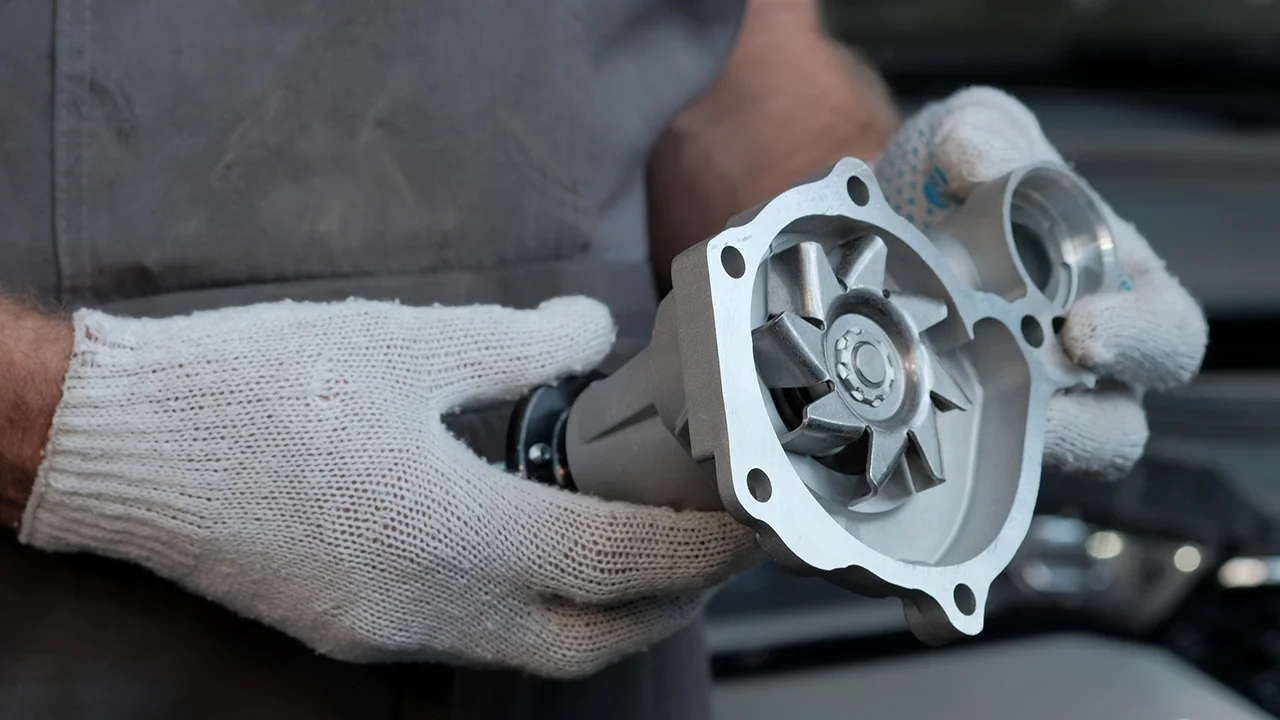
A cooling system does not usually fail like a light switch. It whispers first, then argues, then costs you money. The most common failing water pump symptoms include coolant stains near the front of the engine, a sweet smell after parking, pulley noise, heater changes, and a temperature gauge that acts restless before it climbs into the danger zone. For U.S. drivers who sit in school pickup lines, crawl through summer traffic, or run long highway miles between service stops, those small hints matter. A weak pump can stop coolant from moving through the engine, radiator, and heater core the way it should. That is when engine overheating turns from a warning into warped metal, blown gaskets, or a tow bill on the shoulder. Drivers comparing repair choices can also follow broader vehicle maintenance and ownership updates for practical road-life context. The point is simple: catch the pattern while the car still starts, runs, and cools down normally.
The Cooling Problem Starts Before the Needle Looks Scary
A healthy water pump is boring, which is exactly what you want. It spins, moves coolant, and lets the thermostat, radiator, hoses, fans, and heater core do their jobs. When it starts to weaken, the first clue is often not a red warning light. It may be a faint odor, a damp mark on the driveway, or a noise you only hear with the hood open. That is why the best diagnosis begins with paying attention to small changes before they join together. The pump is buried on many engines, but its clues often travel outward through smell, stains, belt noise, and cabin heat. Treat those clues like a pattern, not a nuisance.
Why a small coolant leak near the pump matters
A coolant leak around the pump is not the same as spilled washer fluid or rainwater dripping from a splash shield. Coolant often dries into pale, chalky residue. On some cars, it may look pink, orange, green, blue, or yellow depending on the formula. The color helps less than the location. If the stain begins near the pump body, pulley, gasket surface, or weep hole, the pump deserves attention.
The non-obvious part is that a tiny leak can show up after the engine cools, not while you are standing there watching it run. Pressure changes as hot metal contracts. That can push coolant through a tired seal only after you park at home. Many owners miss it because the puddle never grows large. The level in the reservoir drops a little at a time, and the car keeps acting normal.
One real-world clue is the sweet smell after a commute. A driver in Phoenix or Dallas may shut the engine off, walk past the grille, and catch that syrup-like coolant odor for two seconds. No steam. No dashboard light. Still worth checking. A small leak plus hot weather can become engine overheating during the next long idle. It is also common for splash shields to hide the drip until coolant finally reaches the ground. By then, the leak has already had a head start.
How heat hides the early warning signs
Heat can make a weak pump seem better than it is. At highway speed, airflow through the radiator may mask poor coolant movement. Then the same vehicle gets stuck at a drive-thru, and the gauge creeps higher. That pattern fools people because the car feels fine on the road and acts sick only in traffic.
This is where a coolant system maintenance checklist earns its keep. Do the simple checks cold: reservoir level, hose condition, belt condition, dried residue, and fresh drips. Never open a hot radiator cap. The U.S. Department of Transportation’s road-trip safety guidance also points drivers toward coolant checks before long drives, which is dull advice until it saves an engine.
The quiet insight here is that overheating is often the last chapter, not the first one. By the time steam rises, the pump may have been leaking, wobbling, or slipping for weeks. A careful owner does not wait for drama. The cheap moment is before the gauge gets theatrical. If the car has recently had cooling work, pay even closer attention. Air trapped after service can mimic pump trouble, while a weak pump can make fresh coolant look like the fix failed.
Failing Water Pump Symptoms You Can Catch Before the Gauge Spikes
The best warning signs are the ones you can notice without special tools. You do not need to diagnose the whole cooling system in your driveway. You need enough evidence to stop driving, plan service, and avoid turning a repair into an engine job. That means watching for patterns, not one random clue. A single warm gauge reading after climbing a mountain pass may be explainable. A warm gauge, falling coolant level, pulley noise, and weak heater output are not random anymore. They are a case.
What does a bad pump sound like at idle?
A worn pump bearing can make a whine, chirp, grind, or rough rolling sound from the front of the engine. The sound may change with engine speed. On belt-driven pumps, it can be confused with an idler pulley, alternator, belt tensioner, or power steering pump. That is why guessing by sound alone can send you to the wrong part.
A simple observation helps. With the hood open and the engine running, listen from a safe distance. Do not lean into moving belts or fans. If the noise lives near the pump pulley and grows sharper as rpm rises, the bearing may be failing. If the pulley looks like it wobbles, shut the car down and get help. A loose pulley can throw a belt, and that may take charging, power steering, or cooling with it depending on the vehicle.
Here is the odd part: some pumps leak before they make noise, and some make noise before they leak. Owners often expect every failure to follow the same script. It does not. A quiet coolant leak can be as serious as a loud bearing, especially on modern engines packed tightly under plastic covers. Noise also travels through brackets, so the loudest spot may not be the guilty part. That is why shops use stethoscopes, belt removal tests when safe, and visual checks instead of betting on a hunch.
Why the heater can expose weak coolant flow
The cabin heater is a small radiator under the dashboard. Hot coolant passes through it, and the blower sends warmth into the cabin. When coolant flow gets weak or air enters the system, heat output may fade at idle, surge while driving, or turn warm and cool in waves.
That clue matters in northern states. A driver in Michigan may notice the heater blowing lukewarm air at a stoplight even though the temperature gauge is rising. That combination can point to low coolant, trapped air, pump trouble, or another flow issue. None of those should be ignored. In winter, the driver may care more about cold hands than engine damage, but the cabin is giving an engine clue.
A mechanic still needs to rule out the thermostat, radiator cap, clogged radiator, fan fault, or heater core issue. The point is not to name the bad part from the driver’s seat. The point is to notice that heat inside the cabin and heat inside the engine are connected. When both act strange, the car is telling one story through two vents. Good notes help: when it happens, how long it lasts, whether the fan speed changes it, and what the temperature gauge does at the same time.
Sorting Pump Failure From Other Cooling System Problems
A car can overheat for many reasons, and the water pump is only one suspect. That is why good diagnosis beats parts swapping. Replace the pump when the evidence points there, not because the temperature gauge moved once after a hard hill climb. Still, some patterns make the pump climb the suspect list fast. American vehicles also vary widely. A pickup that tows in Texas, a compact sedan in New Jersey traffic, and a hybrid crossover in Colorado may show cooling trouble in different ways. The repair logic stays the same: find the failed function before buying parts.
When it is not the thermostat, radiator, or fan
A stuck thermostat can block coolant flow. A clogged radiator can shed heat poorly. A dead cooling fan can make the car overheat at idle but behave better at speed. Those failures can mimic pump trouble. The difference is often found in location, timing, and repeat behavior.
A pump-related coolant leak near the front center of the engine is strong evidence. So is pulley play, bearing noise, or residue coming from the pump weep area. If the car overheats at both idle and road speed, and the heater output is unstable, poor circulation becomes more likely. A shop may pressure-test the system, inspect for leaks, check belt drive, look for air pockets, and use temperature readings across the radiator and hoses.
The non-obvious insight: the pump can be blamed too late and too early. Too late when a driver keeps adding coolant without asking where it went. Too early when a shop replaces it before checking a loose belt, bad cap, or trapped air after recent service. Good evidence saves money both ways. Ask the shop what pointed to the pump. A clear answer should mention a leak source, bearing play, flow concern, or test result, not a vague claim that “these always go bad.”
What changes on timing-belt and electric-pump engines
Not every pump is sitting in plain sight. Some are driven by a serpentine belt. Others hide behind a timing belt or timing cover. Some newer vehicles use electric pumps or have more than one pump for engine, turbo, hybrid, or cabin-heat circuits. That design changes both symptoms and labor cost.
On a timing-belt engine, water pump replacement is often paired with timing belt service because the labor overlaps. Skipping the pump during that job can be false savings. If the old pump fails later, the same area may need to come apart again. On many U.S. commuter cars, that extra labor hurts more than the pump itself. This is why a quote that looks high may still make sense when it includes seals, coolant, belt parts, and access work.
Electric pumps bring a different kind of headache. They may fail through internal wear, electronics, wiring, or control faults. The dashboard may show a warning before a traditional leak appears. That does not make diagnosis easier. It means a scan tool and service information matter more, especially when the car uses several cooling loops. A driver may see reduced power, fan roar, or warning messages before seeing a puddle. Modern cooling failures are not always wet.
Deciding When to Stop Driving and Pay for Repair
The hardest moment is not noticing the symptom. It is deciding whether you can limp home, drive to work, or head straight to a shop. People gamble because the car still moves. Engines punish that gamble when heat gets trapped in the wrong place. The safer rule is plain: if the temperature climbs and does not settle, the drive is over. Your calendar can recover faster than an overheated cylinder head. This is even more true when you are far from home, where one bad choice turns into a tow, hotel, and repair search.
Safe checks you can do before calling a shop
Start with the engine cold. Look at the coolant reservoir level. Inspect under the front of the engine for fresh wetness or dried crust. Check the belt for cracks, glazing, fraying, or missing ribs if your pump is belt-driven. Look for coolant spray patterns around the pulley area. A spinning pulley can fling coolant in an arc, leaving marks that do not look like a normal drip.
Then check behavior. Does the gauge rise at idle? Does the heater go cool while the engine gets hot? Do you smell coolant after parking? Does the reservoir keep needing top-offs? Write those details down before calling a shop. A clear timeline helps the technician more than saying, “It overheated once.” Photos help too, especially when the leak dries before the appointment.
A useful engine temperature warning guide can help drivers sort mild temperature creep from an urgent stop-now event. Steam, a red temperature light, sudden loss of cabin heat during a hot reading, or coolant pouring onto the ground should end the drive. Pull over safely, shut the engine off, and let it cool. Do not pour cold water into a hot engine. That panic move can add shock to a system already under stress.
Why delaying water pump replacement can cost more
Water pump replacement can feel annoying because the part may fail before the rest of the car feels old. The temptation is to top off the reservoir and keep going. That may work for a short while, but it also teaches you the wrong lesson. The car did not heal. It bought time.
When coolant drops low enough, the pump may move air instead of liquid. Air does not carry heat out of the engine well. Hot spots can form around the cylinder head before the gauge tells the full truth. That is one reason a brief overheat can leave lasting damage even after the temperature returns to normal. Aluminum engines are common, and they do not enjoy repeated heat spikes.
The practical decision is simple. If you have a leak at the pump, pulley noise, repeated coolant loss, and rising temperature, treat the vehicle as unsafe for normal driving. Towing can feel expensive until you compare it with head gasket work, warped aluminum, or a ruined road trip with kids in the back seat. The repair also protects related parts. Fresh coolant, clean sealing surfaces, and a stable belt drive give the whole cooling system a fair chance.
Conclusion
A water pump rarely asks for attention in a polite, obvious way. It leaves a mark, makes a sound, changes cabin heat, or lets the gauge wander when the engine is under stress. The driver who catches those clues early has more choices: schedule service, compare quotes, and avoid roadside panic. The driver who waits for steam has fewer choices and a hotter engine. Failing water pump symptoms deserve respect because they sit right between normal wear and expensive damage. Do not treat coolant loss as a refill habit, and do not treat front-engine noise as background music. If the signs repeat, get the cooling system inspected while the repair is still contained. Ask for the old part back if you want proof, and keep the invoice for future service history. A cooling repair done early is not glamorous. It is one of the cleaner ways to protect the car you already own. A pump is cheaper than regret.
Frequently Asked Questions
What are the first signs of a bad water pump?
Early signs often include coolant residue near the pump, a sweet smell after parking, whining or grinding near the pulley, low coolant, unstable cabin heat, and a temperature gauge that rises in traffic. One clue alone may not prove pump failure, but repeated clues deserve service.
Can I drive with a leaking water pump?
Short trips are risky if the leak is active, the coolant level drops, or the temperature gauge moves above normal. A small leak can turn severe under heat and pressure. If coolant is dripping or steam appears, stop driving and arrange a tow.
How does a mechanic confirm water pump failure?
A shop may pressure-test the cooling system, inspect the weep hole and gasket area, check pulley play, listen for bearing noise, scan for related codes, and verify coolant flow. Good diagnosis also rules out the thermostat, fan, radiator cap, hoses, and trapped air.
Is water pump replacement worth doing with a timing belt?
Yes, when the pump sits behind the timing cover and the labor overlaps. Replacing it during timing belt service can prevent paying for the same teardown later. The exact choice depends on mileage, service history, parts quality, and the engine design.
Why does my car overheat only when sitting still?
Idle overheating can come from a cooling fan fault, low coolant, trapped air, radiator trouble, or poor pump flow. At road speed, airflow may hide the weakness. The pattern matters, so note whether the heater changes and whether coolant disappears.
What does coolant leaking from the weep hole mean?
A weep-hole leak usually points to a failing internal seal inside the pump. The hole exists to let fluid escape instead of hiding the failure. Once coolant appears there, the pump often needs replacement rather than sealant or repeated top-offs.
Can a bad water pump damage the head gasket?
Yes. Poor coolant flow can create engine heat that warps metal surfaces or stresses the head gasket. Damage may happen before the driver sees dramatic steam. Repeated overheating is especially harmful, so the safest move is to stop driving and inspect the system.
How often should a water pump be replaced?
There is no single mileage that fits every vehicle. Some pumps last for years, while others are replaced with a timing belt or after leaks, noise, or bearing play appear. Follow your owner’s manual and treat cooling-system symptoms as a reason for earlier inspection.