

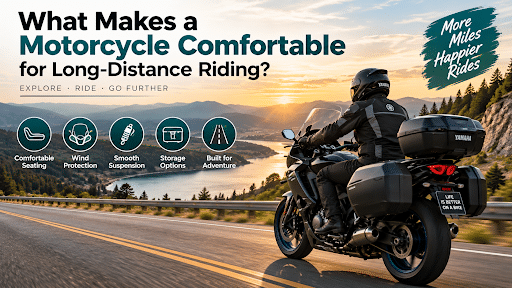
Long-distance motorcycle riding can be an enjoyable way to experience the road, but comfort becomes much more important when a ride lasts for several hours. A motorcycle that feels comfortable around town may not provide the same experience on a long highway trip. Seat design, riding position, wind protection, suspension, weight, storage, and engine characteristics can all affect how comfortable a motorcycle feels over extended distances.
When comparing motorcycles for longer journeys, riders should look beyond appearance and performance figures. The right combination of features can reduce fatigue and make it easier to stay comfortable throughout the ride.
1. A Comfortable Riding Position
Riding position is one of the most important factors in long-distance comfort. A motorcycle that keeps the rider in a natural position can reduce unnecessary pressure on the wrists, shoulders, back, and legs.
Handlebar position, footpeg placement, and seat height all contribute to overall ergonomics. Riders should consider whether they can comfortably reach the controls and maintain a relaxed posture without constantly shifting their body.
2. Seat Design and Support
A motorcycle seat can make a significant difference during a long journey. A seat that provides adequate support and allows the rider to change position can help reduce discomfort over several hours.
Seat width, padding, shape, and height should all be considered. However, more padding does not always mean more comfort. The overall shape of the seat and how it supports the rider are equally important.
For riders planning frequent road trips, touring-oriented motorcycles may offer seating and ergonomics designed specifically for longer periods on the road.
3. Wind Protection
Wind exposure can become tiring during highway riding. A windshield or fairing can help reduce the amount of wind hitting the rider’s chest and helmet, particularly at higher speeds.
The level of wind protection needed depends on the motorcycle and the rider. Sport motorcycles may provide some protection through their fairings, while touring motorcycles often place greater emphasis on protection and long-distance comfort.
4. Suspension and Ride Quality
Road surfaces are not always smooth, especially during long trips where riders may encounter different types of pavement. A well-balanced suspension system can help the motorcycle handle bumps and uneven surfaces more comfortably.
Suspension setup also affects handling and stability. Riders should consider the type of roads they expect to travel and whether the motorcycle’s suspension is appropriate for those conditions.
5. Engine Performance and Highway Capability
Engine performance is another consideration when choosing a motorcycle for long-distance travel. The motorcycle should have enough power for its intended use without requiring the rider to constantly work the engine or transmission.
This does not necessarily mean choosing the largest engine available. The better approach is to consider how the motorcycle performs at the speeds and conditions where it will be ridden most often.
6. Weight, Handling, and Stability
A motorcycle’s weight can affect both comfort and confidence. A heavier motorcycle may provide stability on highways, but it can also require more effort when maneuvering at low speeds or moving the motorcycle when parked.
A lighter motorcycle may be easier to handle around town, while a larger touring or adventure motorcycle may provide additional stability, storage, and long-distance equipment. Riders should consider where they will use the motorcycle rather than focusing on weight alone.
7. Storage and Practical Features
Long trips often require more equipment than everyday rides. Luggage systems, saddlebags, top cases, and other storage options can make it easier to carry clothing, personal items, tools, and travel essentials.
Practical features such as comfortable passenger seating, electronic displays, charging options, and cruise control can also make longer journeys more convenient, depending on the motorcycle.
Comparing Features Before Buying
When looking at new motorcycles for sale, riders should compare features that directly affect their intended use rather than focusing only on price or appearance. A motorcycle designed primarily for short rides may have different priorities than one intended for touring.
| Comfort Factor | Why It Matters on Long Rides |
| Riding position | Helps reduce strain on the body |
| Seat design | Supports comfort during extended riding |
| Wind protection | Reduces wind pressure and fatigue |
| Suspension | Improves ride quality over uneven surfaces |
| Engine performance | Supports relaxed highway riding |
| Storage | Makes carrying travel essentials easier |
| Weight and stability | Affects handling and confidence |
How Much Does a Comfortable Motorcycle Cost?
There is no single new motorcycle price that determines whether a motorcycle will be comfortable for long-distance riding. Pricing varies according to the model, engine size, features, equipment, and intended use.
Instead of choosing a motorcycle based solely on cost, riders should compare its ergonomics, equipment, performance, and practical features. A slightly different model may offer features that are more useful for the type of riding the owner plans to do.
What About Sport Motorcycles?
Some riders may assume that new sport motorcycles for sale are only suitable for short, performance-focused rides. However, comfort varies considerably between models. Sport-touring designs, for example, can combine performance with features intended for longer road use.
Riders interested in a sport motorcycle should pay particular attention to riding position, seat design, wind protection, and overall ergonomics before deciding whether a particular model suits longer journeys.
Conclusion
Motorcycle comfort on long-distance rides comes from the combination of several factors rather than one specific feature. Riding position, seat support, wind protection, suspension, engine performance, handling, and storage can all influence the experience.
Before choosing a motorcycle, think about the distances you normally ride, the roads you use, and the features that matter most to you. Comparing different models with these factors in mind can make it easier to find a motorcycle that feels comfortable and practical for longer journeys.
Frequently Asked Questions
What makes a motorcycle comfortable for long-distance riding?
A comfortable riding position, supportive seat, wind protection, smooth suspension, stable handling, and practical storage can all improve long-distance comfort.
Are touring motorcycles better for long-distance riding?
Touring motorcycles are generally designed with longer rides in mind and may include features such as additional wind protection, luggage, comfortable seating, and long-distance ergonomics.
Can a sport motorcycle be comfortable for long rides?
Yes. Comfort depends on the specific model. Sport-touring motorcycles can combine sport-oriented performance with features designed for extended road riding.
What should I look for when buying a motorcycle for touring?
Consider seat comfort, riding position, wind protection, suspension, fuel range, storage, passenger comfort, and highway performance.
Does motorcycle weight affect long-distance comfort?
Yes. Weight can influence highway stability and low-speed handling. The ideal balance depends on the rider, motorcycle, and intended use.
Is a higher new motorcycle price always linked to better comfort?
No. Price alone does not determine comfort. Riders should compare ergonomics, equipment, suspension, wind protection, and other features relevant to their riding needs.